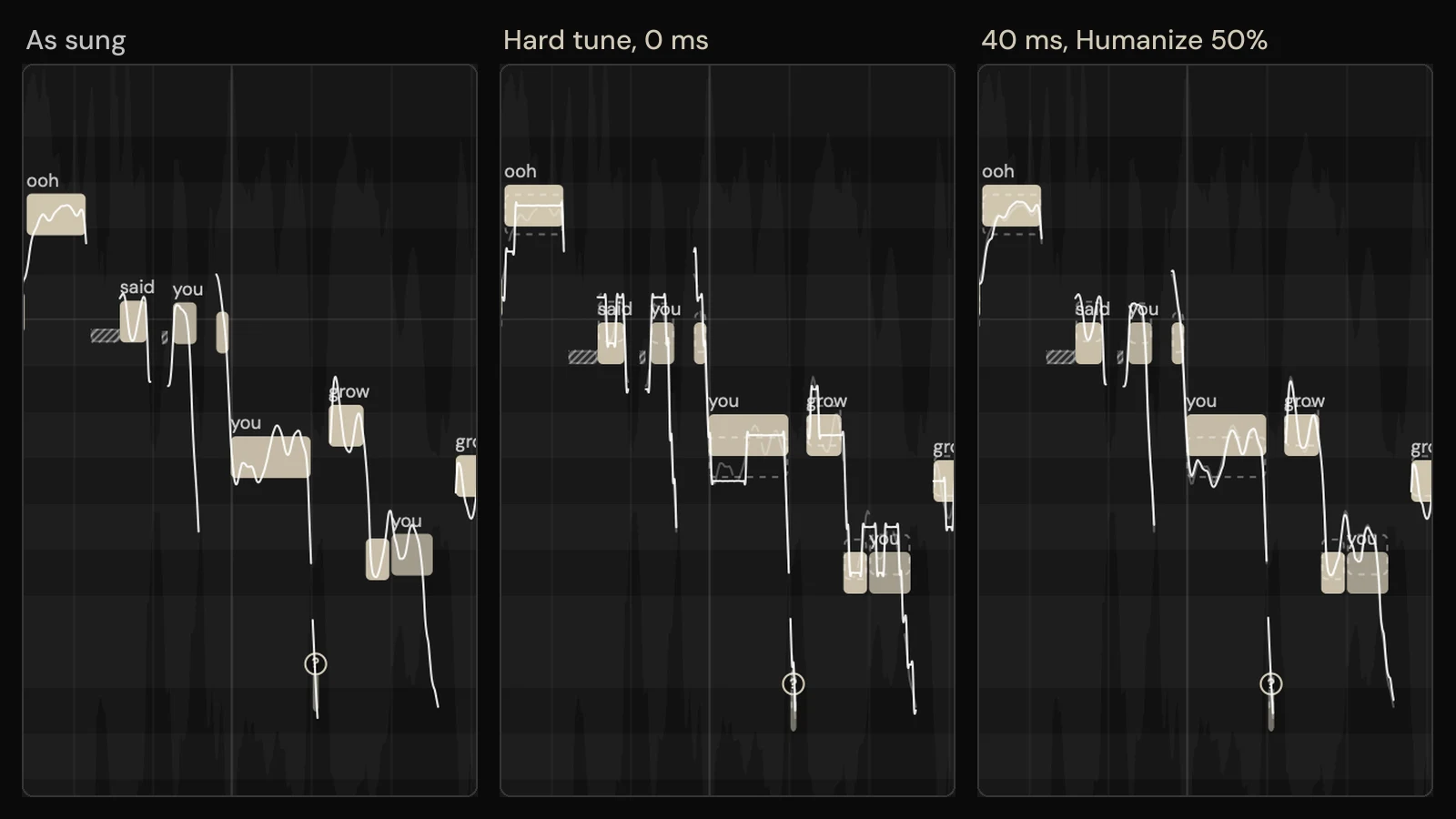
Retune speed is how quickly the pitch is pulled onto the note once the voice drifts off it, in milliseconds. Smaller is faster. It changes the sound more than any other setting on an automatic tuner.
0 ms
The pitch jumps onto the note and stays there, and every slide between notes becomes a step. That is the hard-tuned sound of a lot of pop, hip-hop and electronic music. On the songs I test with, 0 ms leaves held notes about 2 cents from the note, which is as close as singing gets.
10 to 20 ms
The voice gets to start each note on its own before it is pulled in, so part of each scoop survives and the vibrato is reduced rather than erased. At 20 ms the same songs ended up around 8 cents from the note on held stretches. Nobody hears that as out of tune, and nobody hears it as processed either, which is why so many pop leads sit here.
40 ms and slower
Most of the singer's movement comes through, and only notes held long enough are nudged onto pitch. At 50 ms the songs sat around 11 to 12 cents from the note. Ballads and singer-songwriter takes usually want this end.
Humanize
One speed for everything is a compromise: what suits a quick run is too fast for a held note. Humanize makes long notes arrive more slowly while short ones are still tuned. If the runs sound right and the held notes sound robotic, add Humanize before slowing everything down.
The same number means the same thing
I set the speeds in Intonic Vocal and Intonic Live in the same milliseconds as the best-known tuner, then checked it: the same number leaves a song about as far off the note in both, within a cent. If you know the speed you like there, type the same number here. At the same speed, Intonic Vocal makes about a third fewer of the stepped jumps that give tuning away.
Starting points
- Rap and effect vocals: 0 ms, Humanize off.
- Pop leads: 10 to 20 ms with a little Humanize.
- Ballads and acoustic takes: 40 to 80 ms, Humanize around 50%.
- Doubles and backing vocals: a bit faster than the lead, so the stack stays tight.