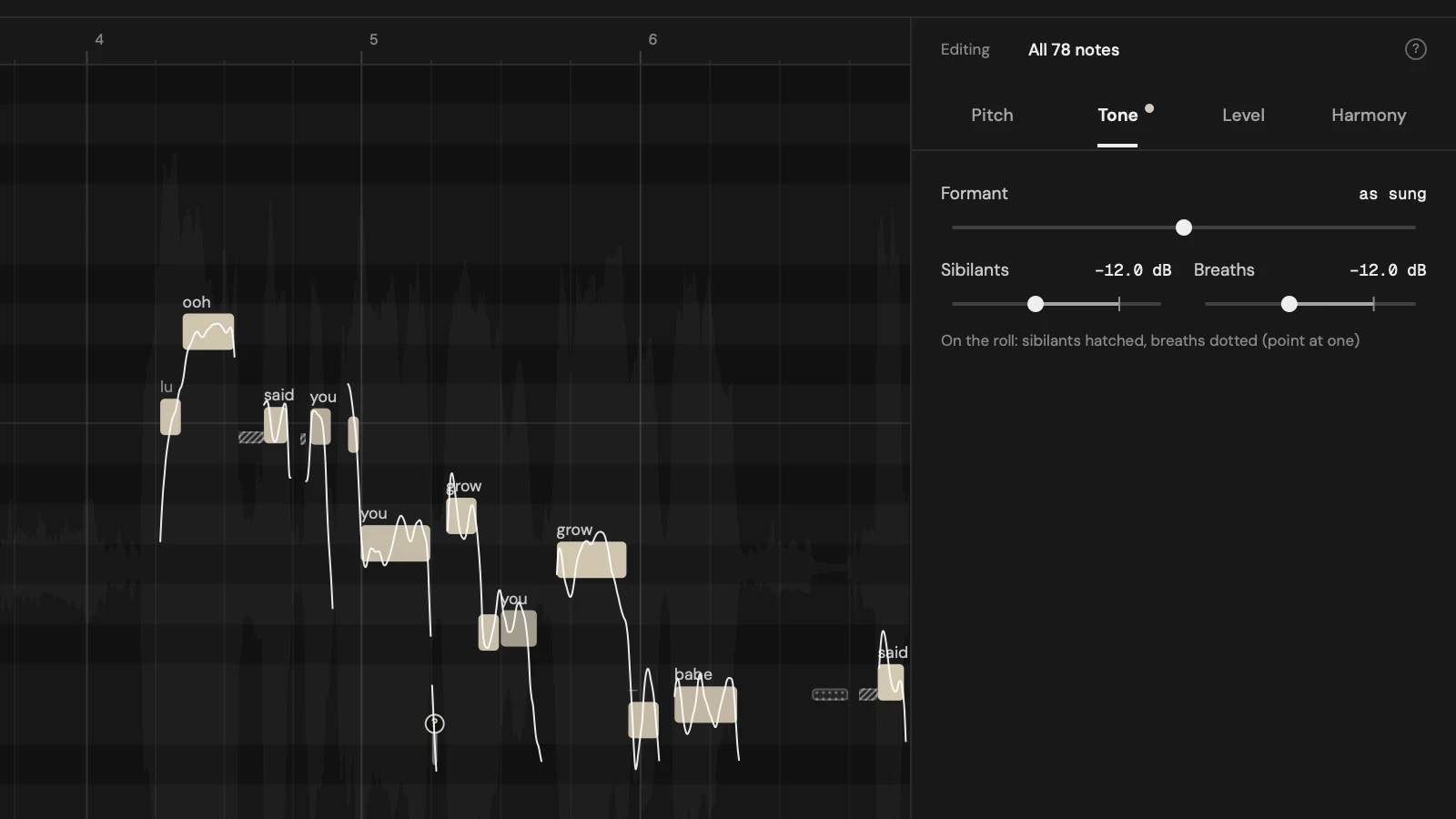
Between the notes of every vocal there are breaths and consonants: the inhale before a phrase, the hiss of s and sh. Both belong to the performance. Both also get louder relative to the singing once the vocal is compressed and brightened, which is what a modern mix does to it.
Take out every breath and the vocal sounds edited. The breath before a line tells the listener the singer is about to come in; with it gone, the line starts from nowhere. Turn breaths down instead. Six to 12 dB is usually enough, and the ones before a big chorus are often worth leaving alone.
Sibilants are the harder case. A de-esser turns down a frequency band whenever it gets loud, which catches the s's but also dulls any singing that happens to sit in that band. Turning down only the s's leaves the singing as it was. In Intonic Vocal that is Sibilants and Breaths under Tone: the hiss and the breath louder or softer, the sung notes untouched, with the s's hatched and the breaths dotted on the roll so you can see where they are. Do it before adding brightness, compression or reverb, since each of those makes them worse, and on doubles turn them down further than on the lead.