I built Kodai, BeatSynq and ProducerGrid before Intonic. Intonic is the one I wanted most myself: vocal tuning that is easy to use and sounds better.
Two plug-ins
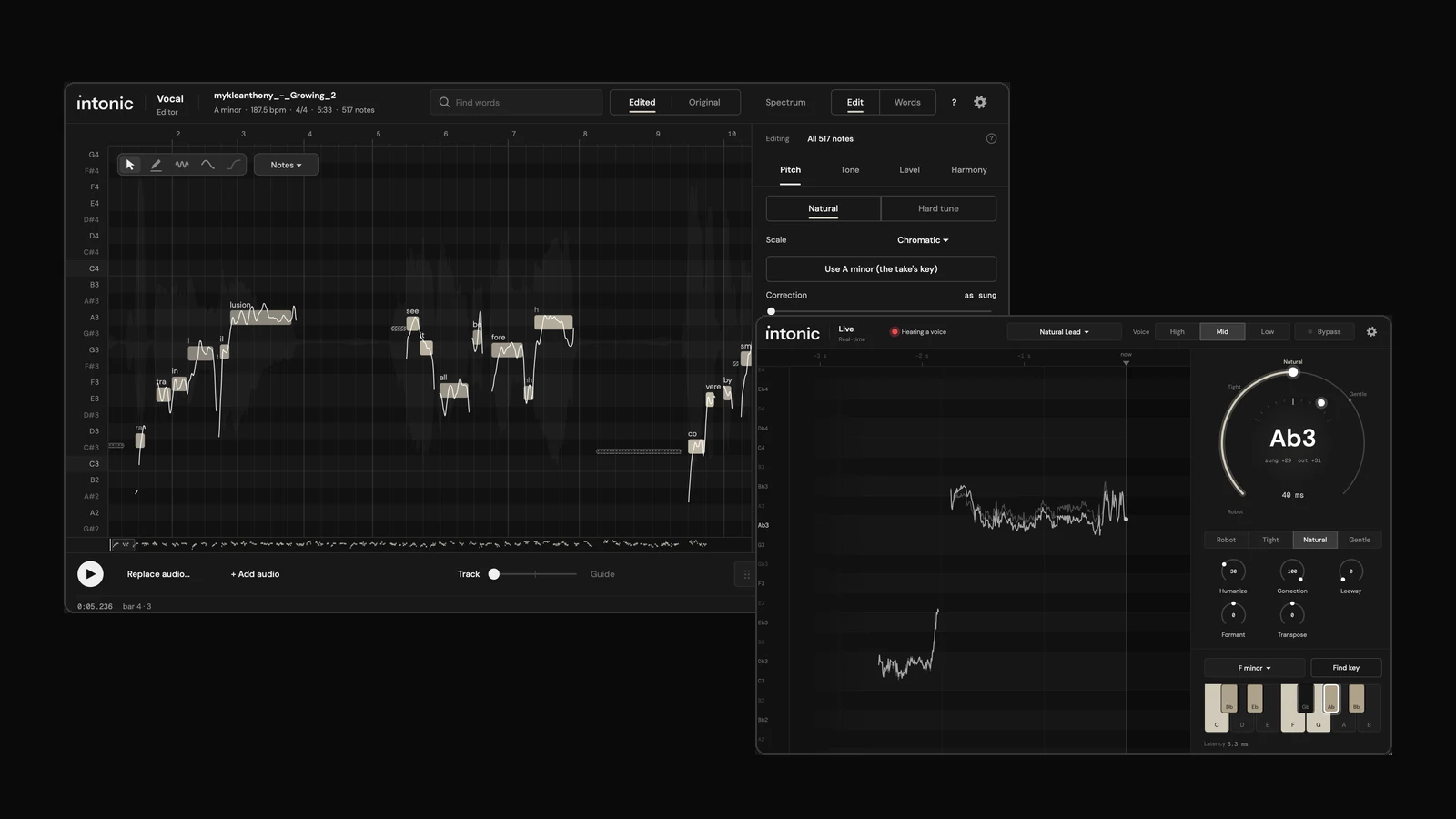
Vocals get tuned at two moments. While the singer is recording or on stage, they want to hear themselves in tune with nothing to set. After the take, the producer wants to see every note, fix what is wrong and leave the rest. Those are different jobs, so they became two plug-ins, Intonic Live and Intonic Vocal, and each works without the other.
Why I measure
Listening tells you something changed. It doesn't reliably tell you whether it got better, especially when you made the change yourself. So every claim on the site is a number I can measure again.
The test I trust most is comparing against the singer. When a note is moved up a semitone, a fourth or a fifth, I compare it with the same singer actually singing that note, from public recordings made for research. The closer the moved note is to the real one, the better. That settles what natural means without anyone's taste involved.
Two numbers I changed
Early on, one of my tuning comparisons looked better than it should have. The reason was the settings: my retune speed and the best-known tuner's did not mean the same thing at the same number. I rebuilt the speed scale so the same number gives the same result in both, checked it from 0 to 400 ms, and ran the comparison again. The lead shrank to what it really is: just as in tune, with about a third fewer stepped jumps.
Latency went the same way. A note's start comes out of Intonic Live 0.3 ms after it is sung, and for a while that was the number on the page. It is true, but it is not what a singer hears through a whole phrase, so the page now gives the average, about 3 ms, and the worst case on low notes, 14 ms.
I publish what I measure and how, so anyone can check it. How the plug-ins work inside stays mine. Both are out for Mac and Windows, and if you make vocals I would like to hear what you use them on.