A double, the same part sung twice and played together, makes a chorus wide. It only works when the two takes agree. Words that start apart sound like an echo, notes a few cents apart sound like a chorus pedal, and two sets of s's sound like a lisp.
Finish the lead first, then bring every double to it, never the other way round. Tighten the doubles first and then change the lead, and you do the work twice. In Intonic Vocal, put the plug-in on the lead and on each double; each double gets a Match step, which moves it to the lead and leaves the lead alone.
Timing
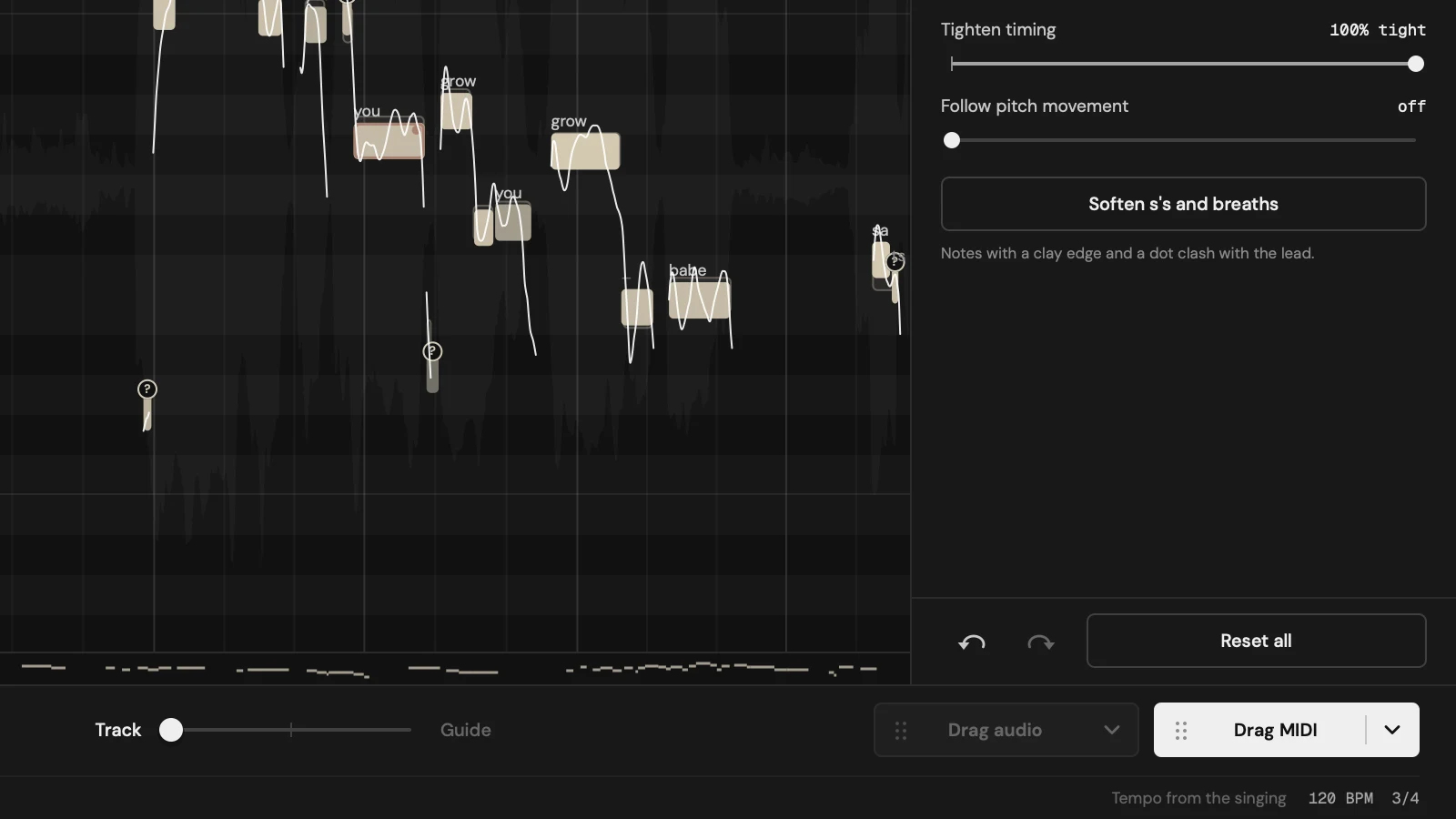
Tightening means pulling the starts and ends of the double's words onto the lead's and stretching the audio between them. Match lines them up by how the words sound rather than by a grid, because nobody sings on the grid. Fully tight suits modern pop and big stacks. Halfway keeps a little looseness, so the double doesn't collapse into the lead and vanish.
Pitch
Two people holding the same note never wobble together. Follow pitch movement keeps each note at its own interval to the lead, whether unison, an octave or a third, and makes it follow the lead's slides and drift, tightly or halfway.
S's and breaths
With four doubles there are five s's on every word, and they add up to a hiss. Soften s's and breaths takes them 12 dB down on the double, so the lead carries them and the stack doesn't. When a recorded harmony rubs against the lead, a minor second, a tritone or a major seventh, the note gets marked, so you can find it without soloing every track.